
Art Organization Tips
My studio is always in a state of disorganization; that's just how it works when you're actively making art and using your art supplies! I try to do a little tidying up every day, and a big declutter a few times a year.
I have found that certain areas of my art business really need me to stay on top of organization, and I want to share a few helpful tips with you.
I receive a small commission from some of the links below. Thank you!
Good organization keeps paintings from getting lost. I am embarrassed by how many times I've turned my studio upside down trying to find a painting that's out in a gallery somewhere. It's hard to keep track!
If you sell paintings or submit to art shows, keeping good records will save you a ton of headaches. I've been using Artwork Archive for about 4 years. I upload a picture of a finished painting that I hope to sell or exhibit. Each painting gets a listing with a picture, description, size and price, and as I submit paintings to shows, I can track where they've been and record when they are sold. I'm also able to keep track of specific art events and galleries, show deadlines and dates and quickly retrieve records on awards and recognition to add to my CV.
Artwork Archive has been an easy way to keep track of painting prices, titles and sizes, plus I can login and access my records from anywhere - a lifesaver when I'm traveling and need to quote a painting price or remember who bought it!
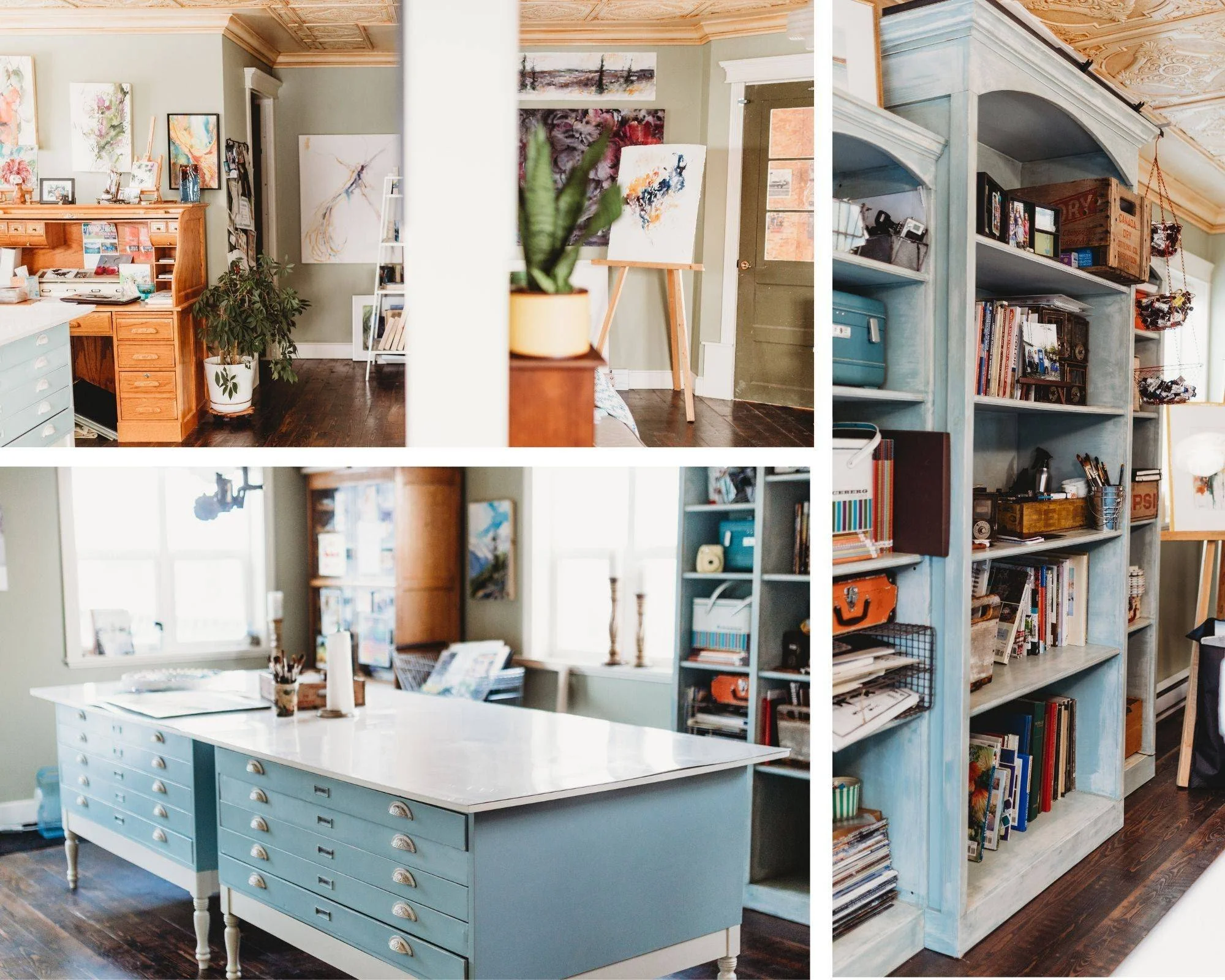
2. Art Storage: You've seen my beautiful flat files. We bought them used, painted them and added bases and tops so I could use them as a work surface. I love having so much space to work!
Their enormous shallow drawers are wonderful for storing art, but I've had a hard time figuring out the best way to sort paintings into each drawer. Sorting by subject sort of worked, but recently I reorganized my paintings and now store them by size. For some reason I can remember what approximate size a painting is quite easily, and it also makes it easy to find art that I can frame quickly using the frames I have in stock. I have a drawer for 9x12 inch paintings, one for quarter sheets (11x15 approx), one for half sheets, one for full sheets, and one for smaller than 9x12. You get the picture. I have one more drawer for unfinished paintings and one for teaching materials, and this has made it easy to put my paintings away, and easy to find them again.
3. Access is Key! In my great drawer reorganization of 2025 (see #2 above), I cleared out the top drawer below my painting area and moved all my mixed media tools into it. Stencils, crayons, pens, they are all out of sight, yet close enough to grab should I feel inspired to use them in my watercolour painting. You won't use what you can't reach, so make your favourite tools as accessible as possible.
If you don't have a dedicated studio space, access is even more important. Keep your supplies as close as possible, tucked into a decor-friendly box or basket in your dining room or living space, or try a wheeled cart that can be moved from place to place. I also love this tote, it reminds me of the bag I used back when I learned to paint on my living room sofa!
I really think that when it comes to organization, the key is to make it as easy and accessible as possible. Sometimes a small change is all it takes to get a workflow that helps you be more creative and spend less time figuring out "where did I put that?"
If you have an organization tip you'd love to share, send me an email! I'd love to see how you're maximizing your workspace or storing your paintings, and maybe I can feature them in a future email!
Happy painting,
Angela
In 2026 my Heart-Led Artist Journey program is leaning hard into healthy artistic mindset and restful growth. If this is the mentorship you need for your art next year, please consider giving this gift to yourself. Join here.