8 powerful pillars of growth all artists should develop
I believe that my art practice - and yours - are built on foundational assumptions that support your growth or limit it. Over the years I've found myself in a process of dismantling the shaky supports that caused me to be self-critical and perfectionistic. The truths I share as I teach now are the foundational pillars that have helped me to paint with so much trust and love, and freedom to continue even when I'm not really sure where I'm going, or how I'm going to get there.
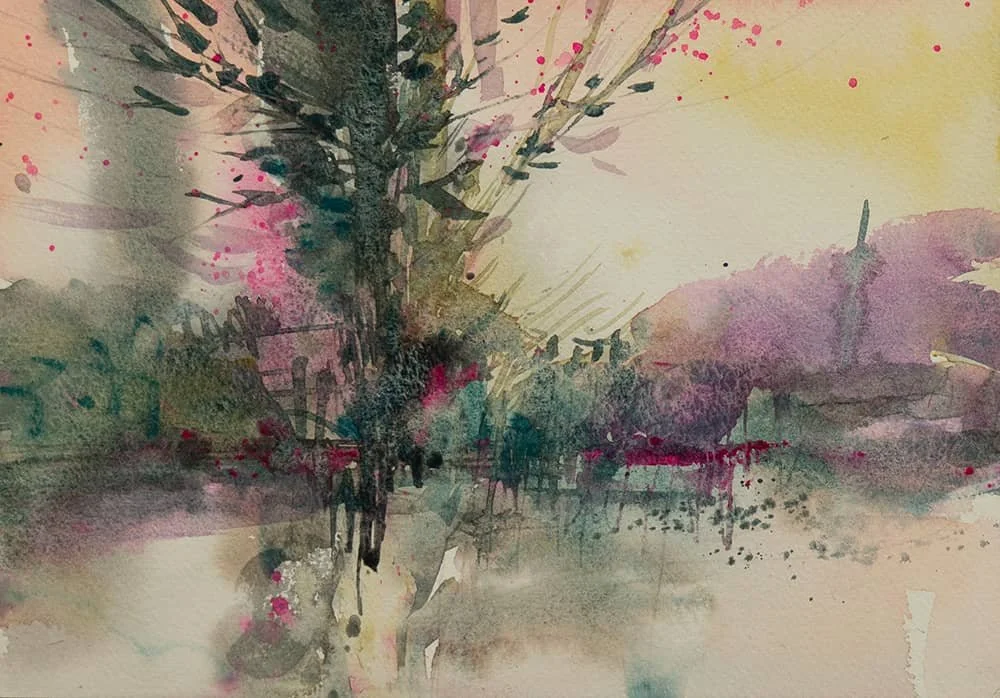
Feathered Light, watercolour
Foundational to my art practice are these truths:
I choose self-trust over external validation. Rather than needing to be affirmed by the right expert, get accepted into the right show, win a prestigious award, I choose to create art that I perceive to be beautiful, that resonates for me.
Process is more important than outcome. If I can invest in creating a beautiful process for making art, the art that emerges will reflect what I've invested...if not in this painting, in the future work I will create.
Watercolour is a relational medium (this is especially highlighted in Watercolour Mastery Intuitive Colour). Watercolour rewards trust, not control, and making space for watercolour's character helps make paintings that feel alive.
Uncertainty is welcome, and useful. Giving up my need to know the outcome frees me to focus on the painting in the moment, and respond intuitively. I prioritize curiosity over judgment.
Experimentation and disruption are creative tools. Creativity cannot be boring. It is birthed in surprise and I need to invite the unexpected for my art to stay interesting and fresh.
Simple is strong. If I have a choice between simplicity and complexity, I choose to strip away nonessentials and find the heart of what I am trying to create and what I want to say. If a concept I am learning feels complex, I will dig at it until I find the simple truth at the heart of it. It's there, and it's all that matters.
Technique serves expression. Serving the painting means my skills become secondary to expressing emotional content and connection. I will grow skill inevitably as I keep painting, but freeing my self-expression requires intention and permission.
As artist, I am giving voice to and interpreting my inner life. This is the scary, freeing part of making art - the reason we judge our work so ruthlessly is often because we are not comfortable revealing so much of ourselves. When I feel exposed and vulnerable by the painting I've created, and yet somehow, something is there, meaningful, me...that's when my art is revealing something precious.