The sentence that changed everything I thought about perspective
“Perspective puts a stranglehold on your painting.” Does that idea surprise you? It set me aback when I first heard David Hockney say it, because it was so counter to the way I'd been taught to think about perspective.
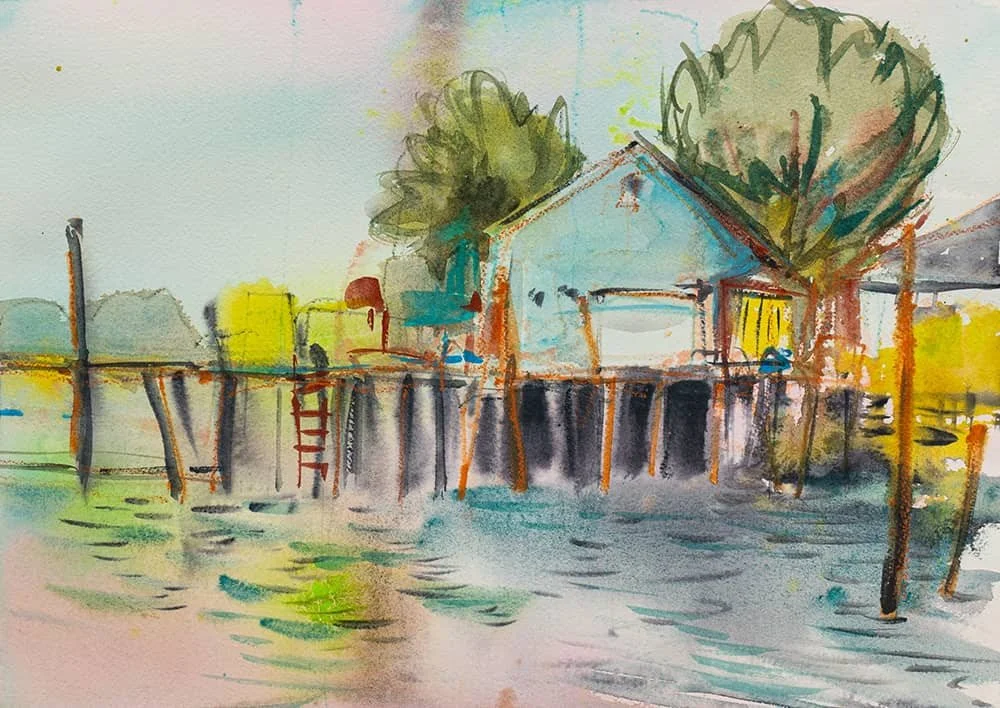
Southeast Harbor, watercolour
Defining Perspective
When artists talk about perspective, we're usually talking about linear perspective; that structure of lines, vanishing points and proportions designed to create scale and distance in our paintings. In the books on perspective in my art library, instructors offer a framework for developing accuracy so a painting can look more realistic. And if realism is your goal, this system is effective. After all, it's been developed over centuries.
But if, like me, you're seeking a balance between representing how your subject looks and how it feels, linear perspective might feel limiting. I had already learned that a detailed pencil drawing felt like a limitation that wouldn't let my paintings flow and evolve. I felt trapped and limited by my ability to draw accurately, and yet anytime I tried to learn and apply principles of perspective to my paintings, I felt frustrated, stifled and bored.
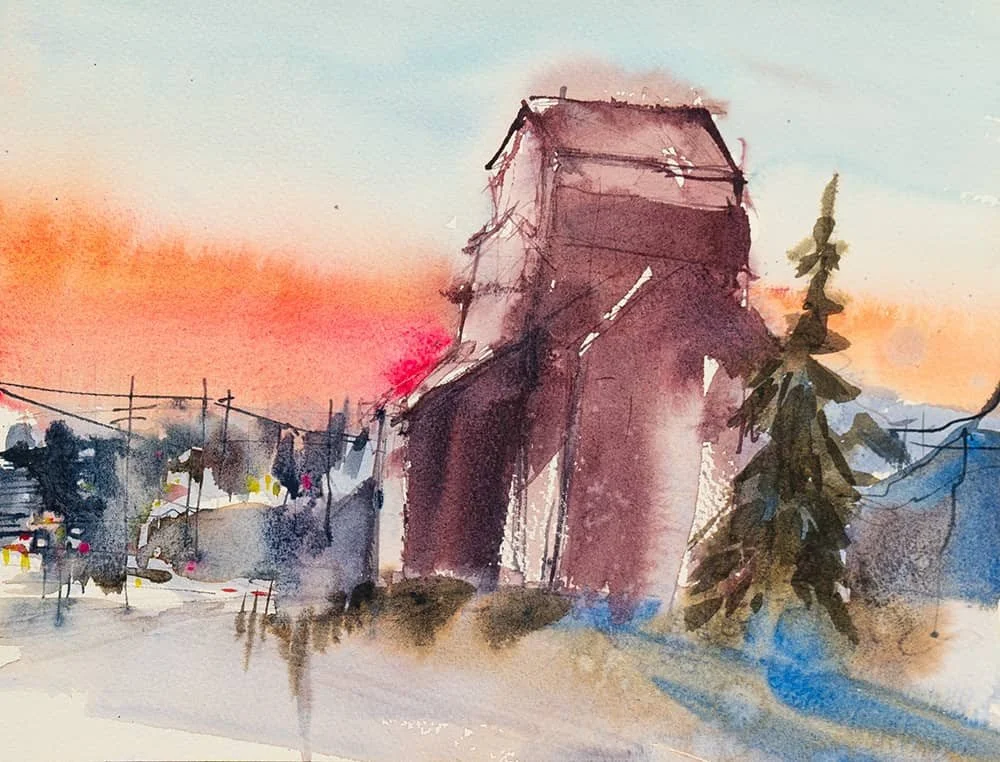
Dawson Creek Art Gallery, watercolour
Permission to Grow Beyond the Rules
In Hockney's words I felt seen, as though he was giving me permission to paint my way...and stop feeling like I was doing art wrong.
Following the rules flattened me out, pushed me into spaces I didn't fit, and instead of realizing that maybe I was made for different spaces, I blamed myself, and constrained myself further.
Hockney's words felt like permission, a big exhale into freedom, and yet what this new release would look like for my art wasn't clear. What I could know, and what I committed to, was that I could follow whichever path felt like freedom. I could experiment with different approaches to describe my landscapes in new terms, and my process of openness and play could continue to form the foundation for my paintings, even amidst my desire to create paintings with at least a sense of scope, form and distance. In doing perspective my way, it no longer felt like a burden.
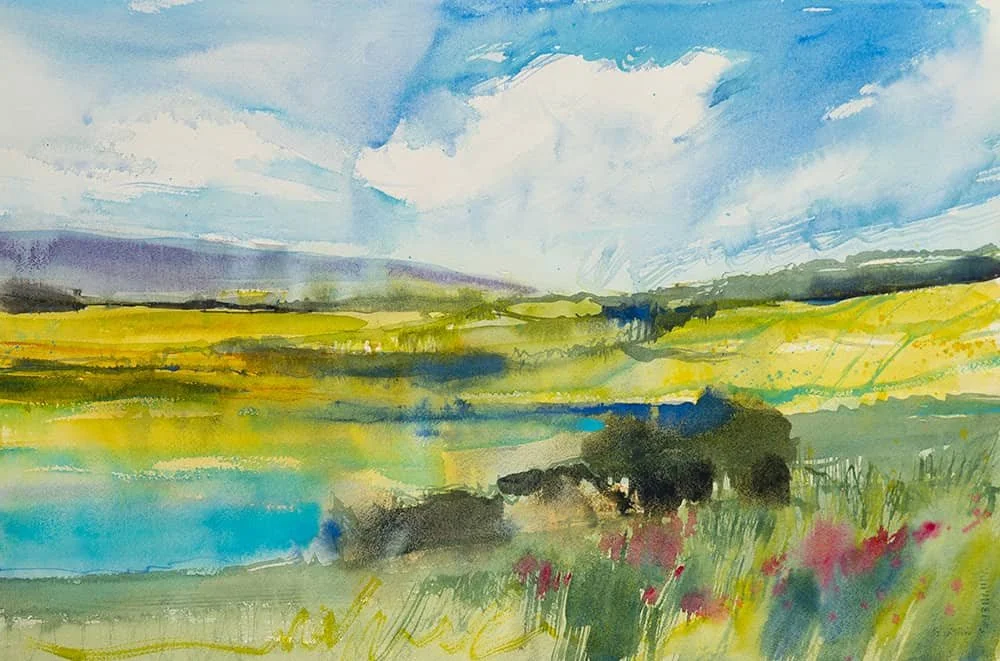
Sweetwater Summer, watercolour
Perspective Isn't Linear After All!
And I think it's interesting that, in the years since I heard that Hockney interview, I've forgotten the original source and can't track down the direct quote. It's possible that he intended a completely different point than what I took away...and that's the amazing thing about perspective. Because in life, we don't think of perspective as linear. People are diverse, our viewpoints, our histories, our stories, our values and cultures range widely, and no matter how well you know someone, you can never really see the world through their eyes.
If perspective in humanity is considered to be diverse and individual, shouldn't art also reflect that beautiful spectrum?
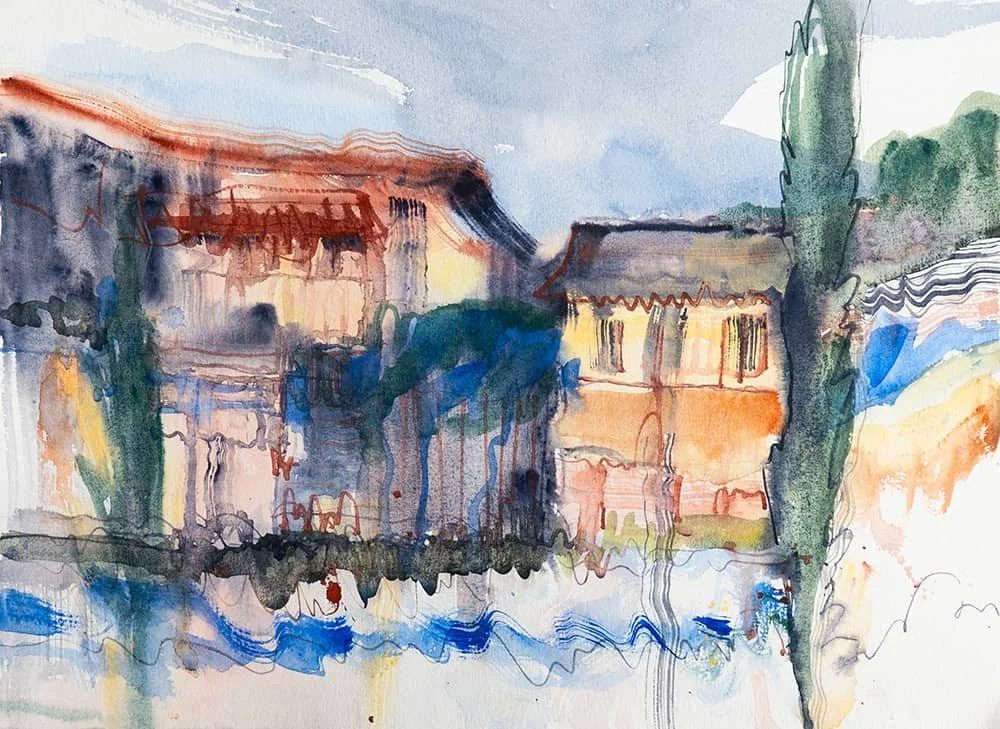
Varenna From the Lake, watercolour
Application: What this means for you
You might be feeling a similar burden, a "should" or "have to" that you're carrying, and maybe you're not even sure what it is.
Something that has helped me to know whether to pursue or reject an artistic principle, tool or strategy has been to ask, Does this feel freeing or limiting? When I reject the guidelines, advice or criticism that feels limiting or oppressive to me, I'm choosing instead to work with what serves my voice and supports my most authentic work. On the flip side, when I hear or realize something that feels freeing, daringly courageous or breathtakingly risky, or when I feel most present, acknowledged and seen, I'm in the space where my art can grow with passion and vulnerability.
Two Strategies to Practice
Ask yourself next time you're painting, or evaluating/criticizing your work: Does the expectation I have for what I should be achieving feel affirming or limiting? If the answer is 'limiting,' maybe the goal you have for your painting isn't going to be achieved with the approach you feel constrained by. I'm not saying you shouldn't want to create a successful painting, but maybe success is found in a direction different than you are pushing toward.
The simplest way to start practicing this shift in perspective is to look at a painting you're struggling with right now. Whatever part is feeling the most like a struggle, release yourself from the obligation to include that element in the painting; eliminate it. Start over and paint instead the parts that felt the most natural, fun or exciting, and stop there. You can figure out later if you want to develop strategies that incorporate that element into future versions, but for now, you get to release yourself from any obligation to paint anything that is tedious, defeating, or frustrating, and build a practice on the parts of painting that feel most natural to you. Congratulations! You are stepping outside the box! Breathe in and enjoy the room to spill over into your messy, beautiful authentic self.
From the earliest paintings on cave walls to graffiti-coated city streets, painting has at its heart been a statement of identity: "I exist. I matter." Don't stifle your perspective in preference for someone else's.
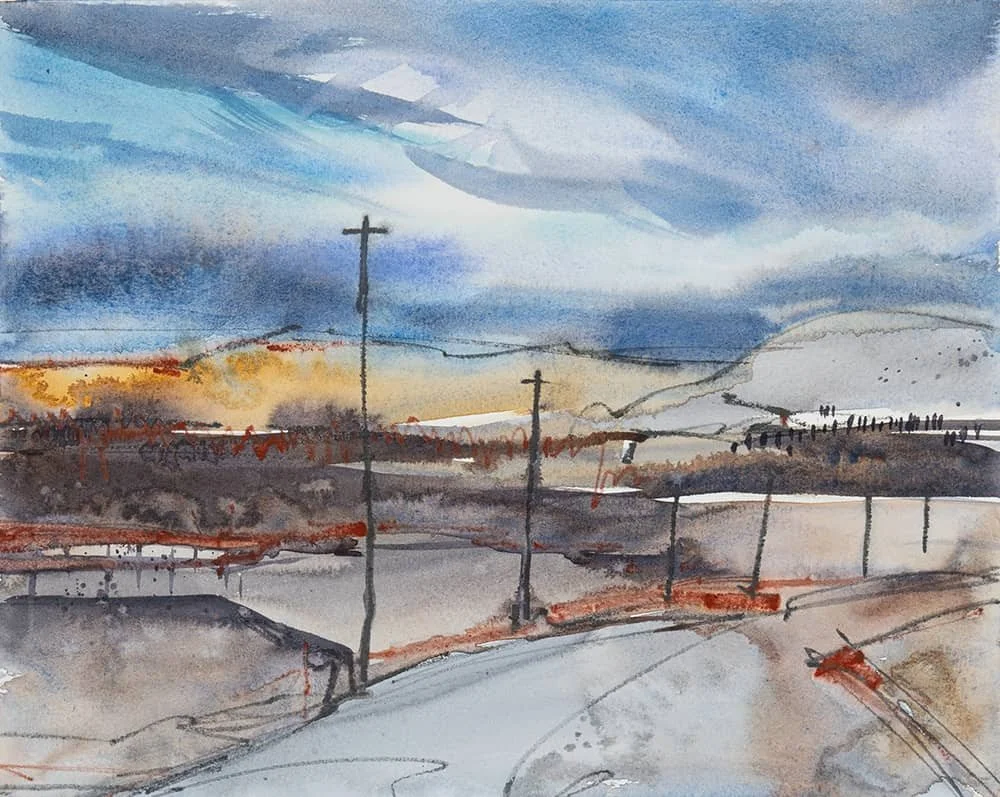
Winter Rituals
I've made it clear that linear perspective is not my thing, but if you'd like to nerd out on the subject, there's a volume of information in Matthew Brehm's "Drawing Perspective: How to See it and How to Apply It" (Amazon affiliate link)